Peace Through Strength vs. Deterrence Through Escalation
Khamenei’s Doctrine and Decision Structure, and Why They Resist Strategic Change

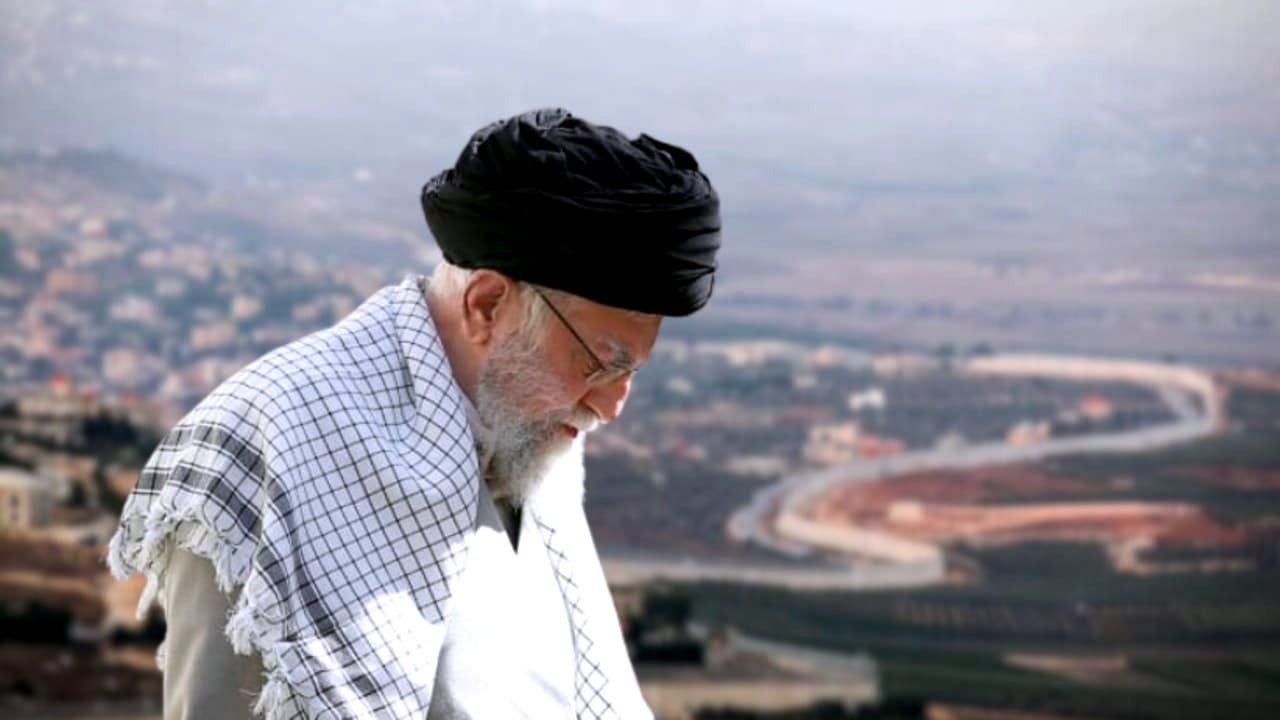
Trump’s “Peace Through Strength” meets Khamenei’s doctrine of “Deterrence Through Escalation.” Iran can offer a deal that sounds historic without accepting irreversible constraint. The process manages tempo, not trajectory.
The Offer
After meeting President Donald Trump on Thursday, Prime Minister Benjamin Netanyahu told reporters that “the president believes the Iranians already understand who they are dealing with.” He added that Trump “thinks the conditions he is setting, combined with their understanding that they made a mistake last time by not reaching an agreement, could lead them to accept terms that would make it possible to achieve a good deal.”
That could prove true, depending on what “terms” mean. If Washington expects Iran to abandon its nuclear program altogether, it will not. Tehran treats the program as strategic insurance and a marker of sovereignty. But Tehran can offer something crafted to sound historic: a nuclear “freeze,” a missile “halt,” a proxy “rollback.” The point would not be compliance. The point would be time: stabilizing the regime through Trump’s term, then rebuilding once he leaves office.
An agreement of that kind would send a domestic signal inside Iran that matters more than any official statement. After the recent massacre, the regime would be signaling that it can kill at scale and still secure a diplomatic reset to survive. And after Trump’s “locked and loaded” and “if you shoot, I shoot,” simply avoiding war becomes a victory narrative. In that story, a deal is not a concession. It is recovery.
The Mismatch
Diplomacy with Tehran has produced agreements, including the 2015 Iran deal, but it has not contained Iran’s trajectory. The problem was not a lack of patience or imagination. It was a mismatch of purpose. Western capitals treated negotiations as “containment”, a way to manage escalation, keep the crisis bounded, and reduce the risk of war. Tehran treated negotiations as operational cover, a way to reduce pressure, fragment coalitions, and buy time while expanding capability.
The outcome is measurable: even as the crisis was “managed,” Iran advanced from zero enrichment to high-level enrichment, expanded missile reach and stockpiles, and deepened a proxy network designed to project power and raise the cost of confrontation. The regime was not “contained.” The urgency was, even as the danger grew.
Tehran’s willingness to “deal,” in other words, is conditional. A pause is acceptable if it is reversible and can be sold internally as resilience rather than capitulation. Terms that appear irreversible are read not as policy adjustments but as regime exposure. When the choice is between a reversible pause and a binding rollback, the Islamic Republic has repeatedly preferred risk.
Khamenei’s lesson from this history is not de-escalation. If Trump’s doctrine is “Peace Through Strength,” Khamenei’s is “Deterrence Through Escalation.”
In the current context, that calculation rests on Tehran’s reading of American limits. The regime assumes Washington has little appetite for a prolonged war and even less political will for a ground campaign in Iran. In Tehran’s view, the worst-case scenario is airstrikes and a limited bombardment campaign, painful but not necessarily regime-ending. That assumption, whether accurate or not, raises Tehran’s tolerance for risk and helps explain how diplomacy can run in parallel with escalation.
The Escalation Argument
Inside Iran, a debate has sharpened in highly influential circles since the 12-day war. Analysts close to the system advanced a harsher conclusion. In their telling, a series of defeats, including Hezbollah’s degradation, the IRGC being forced out of Syria, the toppling of Bashar al-Assad, and the loss of Syria as a critical strategic theater, were the result of Iranian “restraint.” They trace the chain back to the killing of Seyed Razi Mousavi, a senior IRGC commander, in an Israeli airstrike near Damascus in December 2023. They argue Iran should have responded immediately, using Hezbollah and coordinated attacks from Syria to impose unbearable costs, and that restraint emboldened Israel to escalate step by step.
This school of thought extends the logic further. It argues Iran should have forced the region to “co-pay” after regional states helped avert Iran’s first missile attack on Israel, “True Promise 1.” It argues Iran should have used its most destructive supersonic missiles in its first attack instead of older models that were easier to intercept. In their telling, the later use of more powerful supersonic missiles around day 10 of the 12-day war helped compel Israel to seek a ceasefire through Washington.
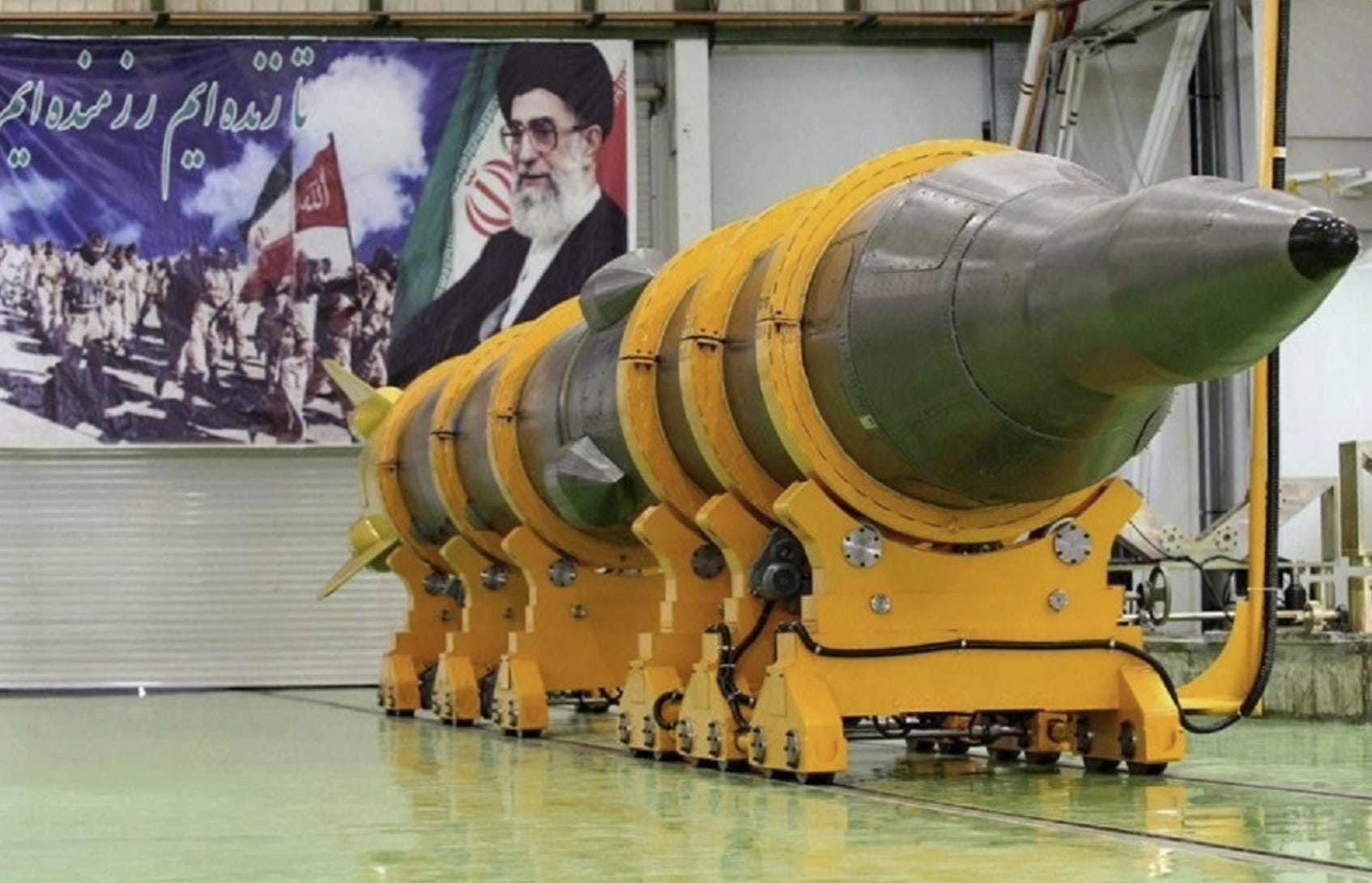
From this perspective, the operational lesson for the next round is blunt. If strikes begin against Iran again, Tehran should immediately widen the war into the Persian Gulf. It should disrupt shipping lanes and energy routes and target U.S. bases across the region, and perhaps economic zones as well. The goal is to transfer pressure: spike oil prices, crater markets, and force outside actors to restrain Washington. A Farsi saying captures the mentality: die once and mourn once. Their variation is: fight once, make everyone suffer once, and force the military option off the table for good.
The same circles also argue that the U.S. administration is not coherent on war and that Tehran should exploit anti-war forces inside and outside the administration. The idea of President Pezeshkian interviewing with Tucker Carlson emerged in these hardliner circles: speak directly to “America First” public opinion and build domestic political pressure against escalation. The interview went ahead.
The Test at Home
The January massacre fits this broader doctrine of “Deterrence Through Escalation”. It was not an accident or a breakdown. It was policy. A society already crushed by economic pressure rose in protest and met lethal repression at scale. The regime chose killing not only as punishment but as precedent. The intended rule is simple: if you take to the streets, we will kill. The purpose is forward-looking, to make protest psychologically unrepeatable before the next external shock arrives, so that when war risk rises again, society remembers the price.
That choice also clarifies where authority sits in the Islamic Republic. Decisions of that magnitude are not the product of bureaucratic drift. They reflect a system built to concentrate risk, violence, and final judgment in one place. In Iran, that place is the office of the supreme leader. Khamenei functions as the lock. He locks foreign policy into an endless process in which capability can rise while the diplomatic calendar absorbs pressure. He locks domestic politics into paralysis, where fear substitutes for legitimacy and violence substitutes for bargaining. This is not merely temperament. It is a system optimized for regime survival rather than national performance.
Khamenei chose escalation at home, massacring his own people when he sensed an existential threat from within. He will try to deter war by striking a deal that pauses pressure without surrendering the regime’s capabilities. If that proves impossible, he will apply the same logic when he perceives a regime-ending threat from abroad.
This is where the old Khomeini analogy misleads. Ruhollah Khomeini described accepting the 1988 ceasefire with Iraq as drinking a “chalice of poison” to keep the system alive. Many assume Khamenei will do the same: swallow humiliation to preserve the Islamic Republic. But Khamenei believes that a truly humiliating capitulation would not save the system. It would fracture it by proving it can be forced to bend. In that logic, compromise is not adaptation. It is absorption, the start of the regime being digested by external pressure and by a society it has tried to crush. Once coercion is seen to work, coercion becomes the template.
The Lock
Khamenei’s choices are rooted in a theological legitimacy model, not a performance-based one. He has built the Islamic Republic as a theological project rather than a standard Westphalian state. He survived a near-fatal assassination attempt early in his rise and has long treated that survival as proof that God preserved him for a mission. In recent years, he has spoken in explicitly providential terms, including claiming that in a meeting with IRGC commanders, it was “God’s words, spoken through my mouth.”
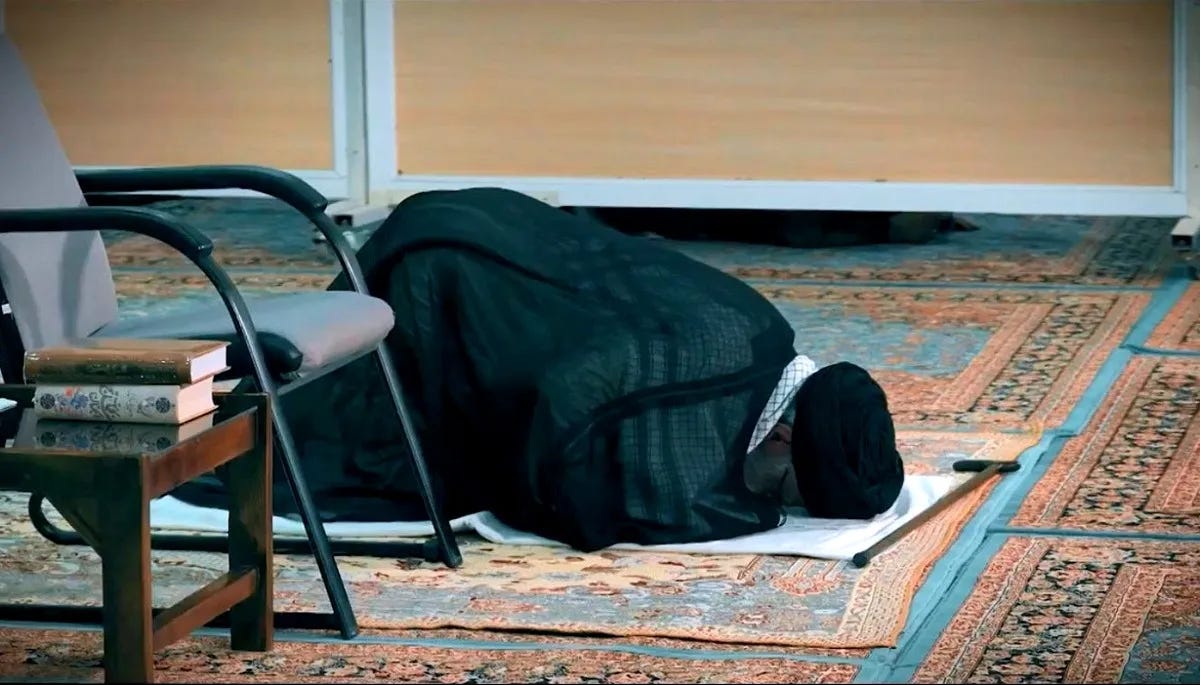
Jamkaran points to the same mentality. When he faces critical decisions, Khamenei turns to the Jamkaran Mosque near Qom, a shrine closely linked in Shiite belief to the Imam of the Age, and to practices such as estekhareh. He reportedly visited Jamkaran two weeks ago. The point is not the rituals themselves. It is what they reveal about how he decides. He treats the Islamic Republic as a trust held for the Hidden Imam’s return, not as a state judged by welfare, growth, or public consent. In that frame, welfare is not a binding constraint, and human cost is not a limit. He has described his mission in those terms, including preserving the Islamic Republic so it can hand its flag to the Hidden Imam when he returns.
This is one doctrine in two arenas. At home, Khamenei killed at scale to make protest unrepeatable. Abroad, he will spread pain at scale to make war unrepeatable. The arena changes. The logic does not.
A leadership operating within that mentality does not bargain like a normal state. It does not trade ideology for relief. It trades time for control. The economy becomes secondary, lives become instrumentally expendable, and welfare is treated with suspicion, consistent with his argument that “comfort makes people less religious.” This is why diplomatic negotiations can continue for years without changing trajectory. The process manages tempo. It does not change direction.
This is the central risk in assuming a “good deal” will produce strategic change. Tehran can offer a pause that sounds historic without accepting irreversible constraint. As long as Khamenei remains the lock, negotiations will buy the regime time, not transform its behavior.
Thought provoking analysis. Your claim of “deterrence through escalation” and Tehran’s willingness to widen a conflict to deter can be likened to Herman Kahn’s nuclear escalation ladder. One of the rungs considered widening a nuclear conflict but in a controlled manner outside of an adversary’s core and critical regions. I think this logic applies for conventional wars too, more so with what is happening now in the Gulf. We have to remember that deterrence is a psychological game, the fact that no one has pulled the trigger yet means deterrence is still at play.
This is a great piece, very sharp analysis. It seems that Tehran regrets not doing more earlier to deter what was coming